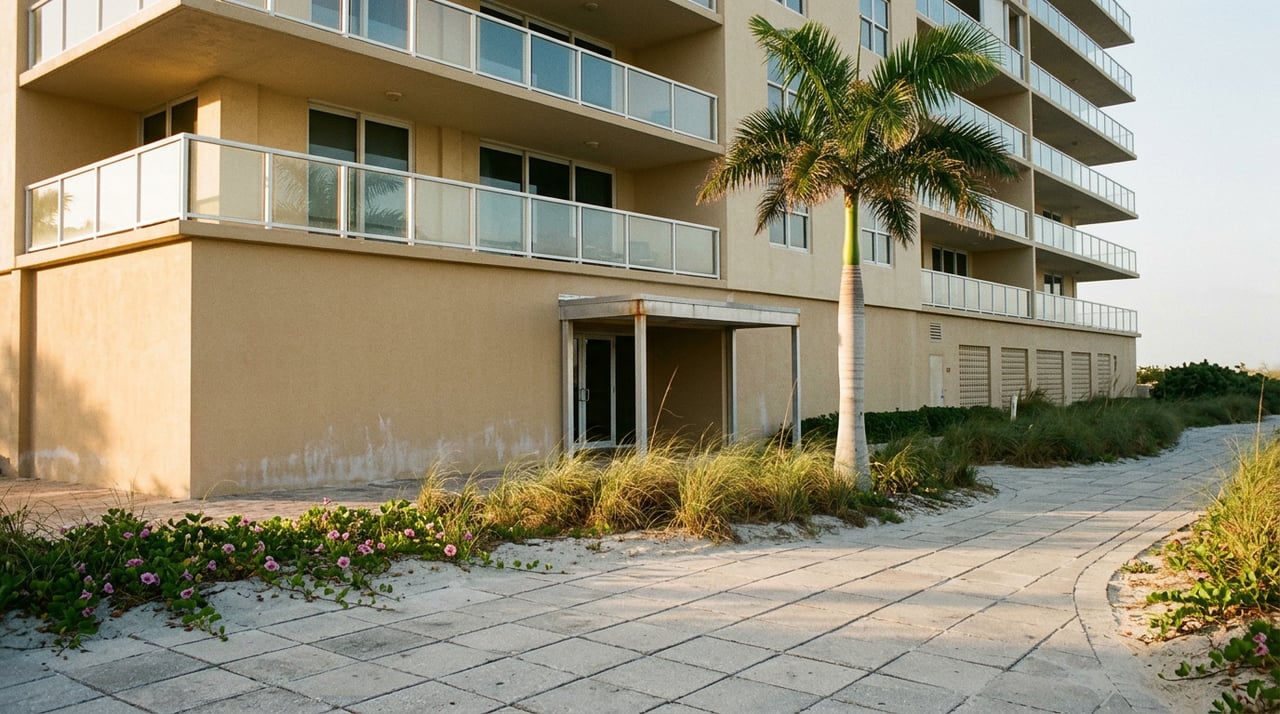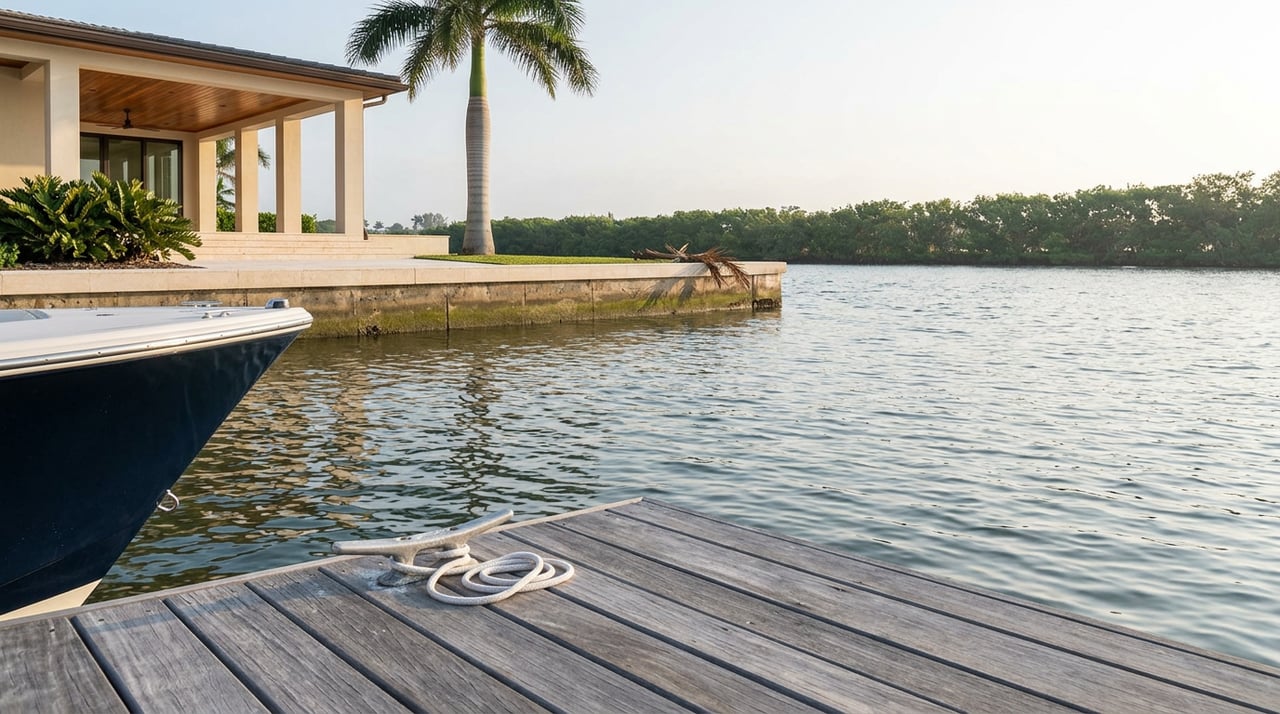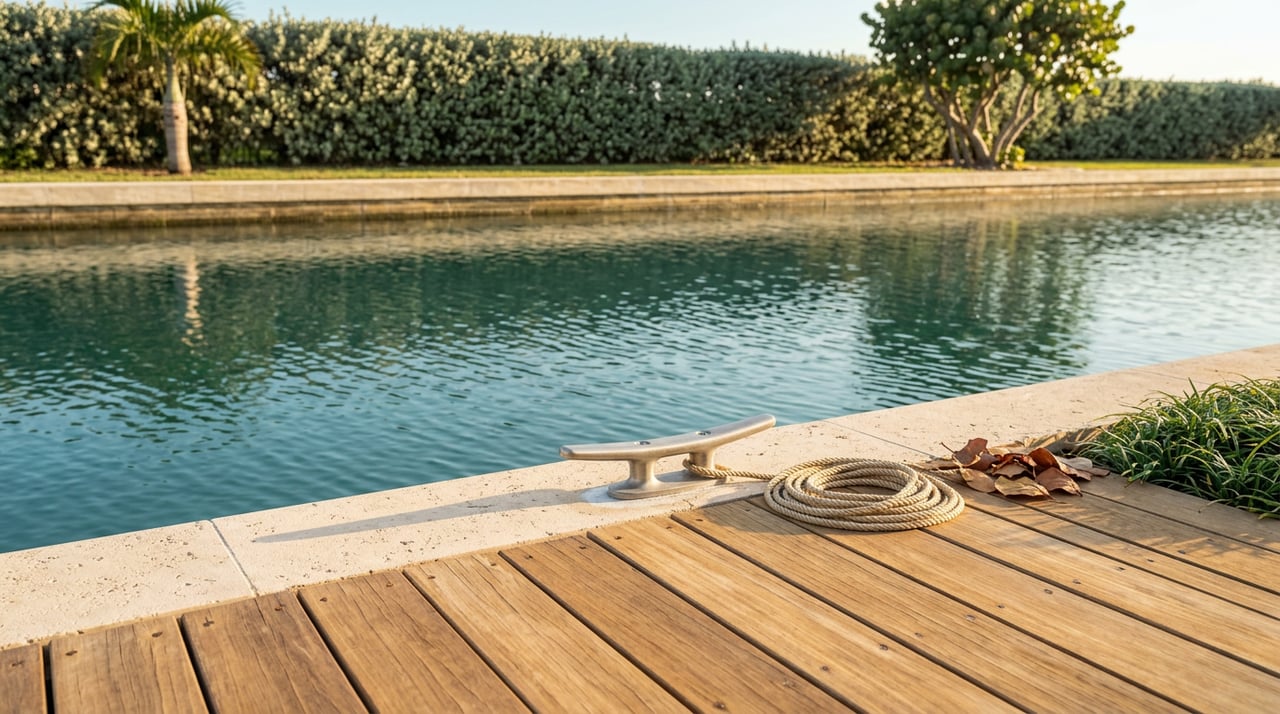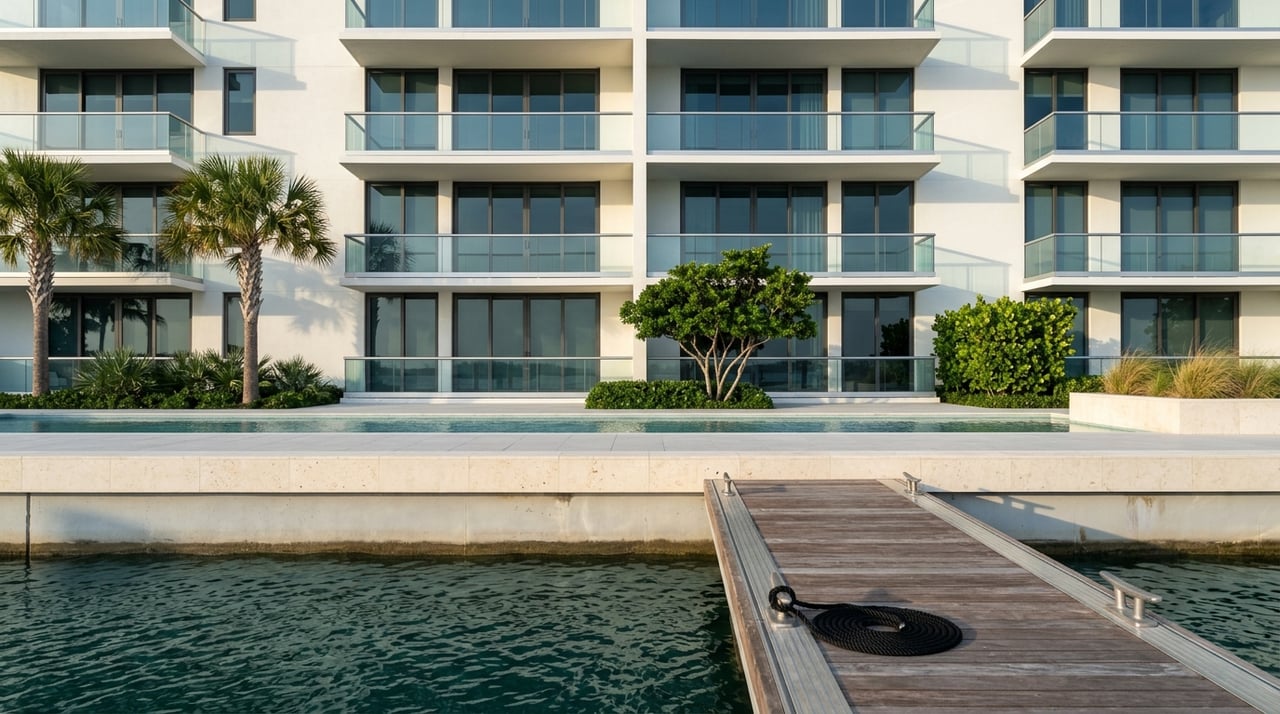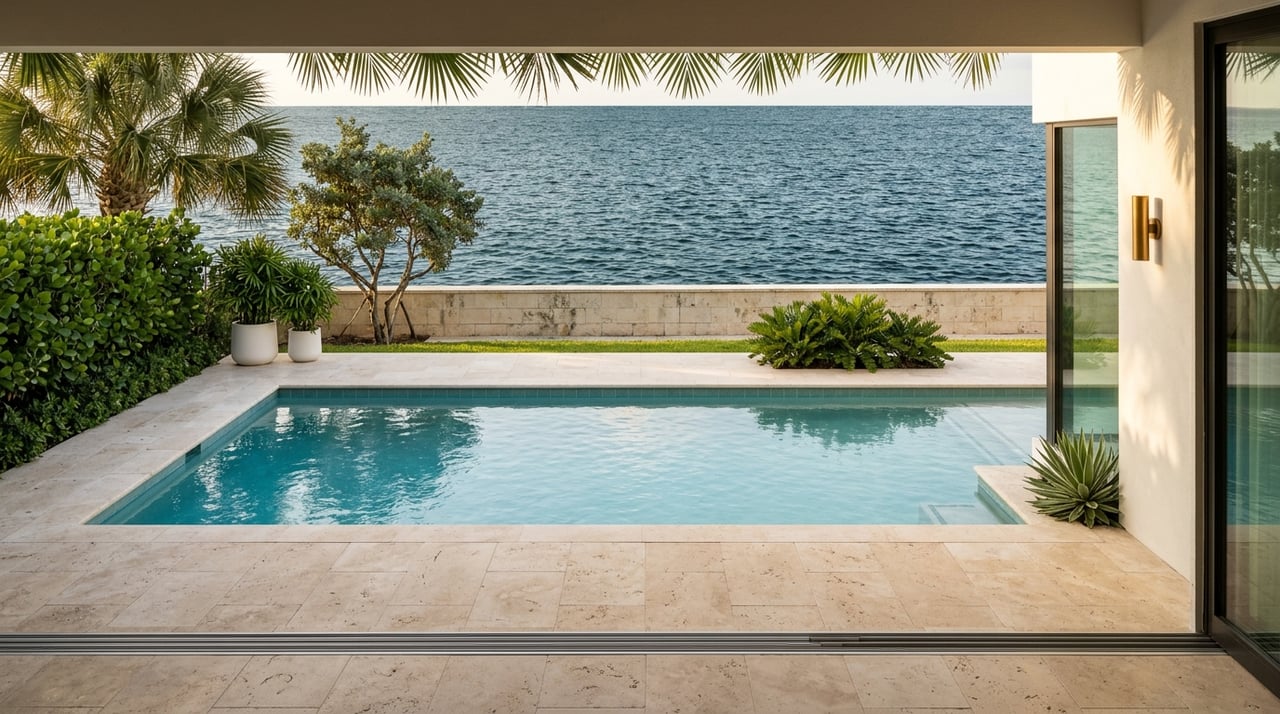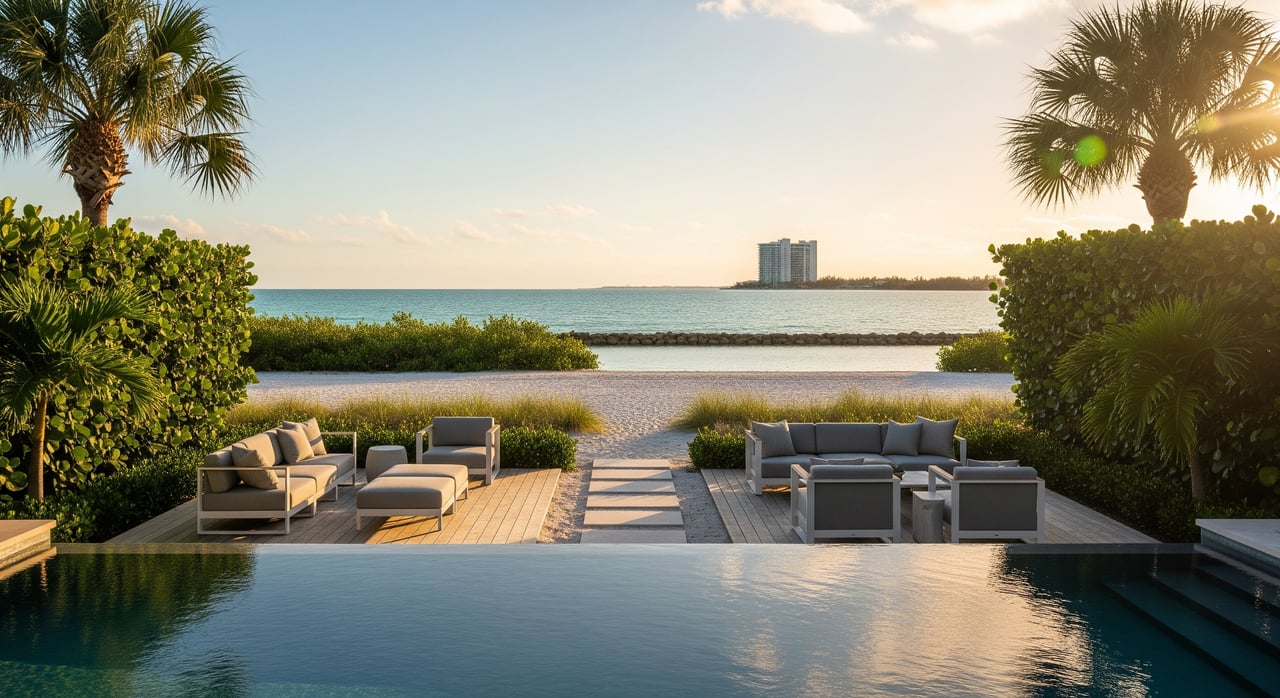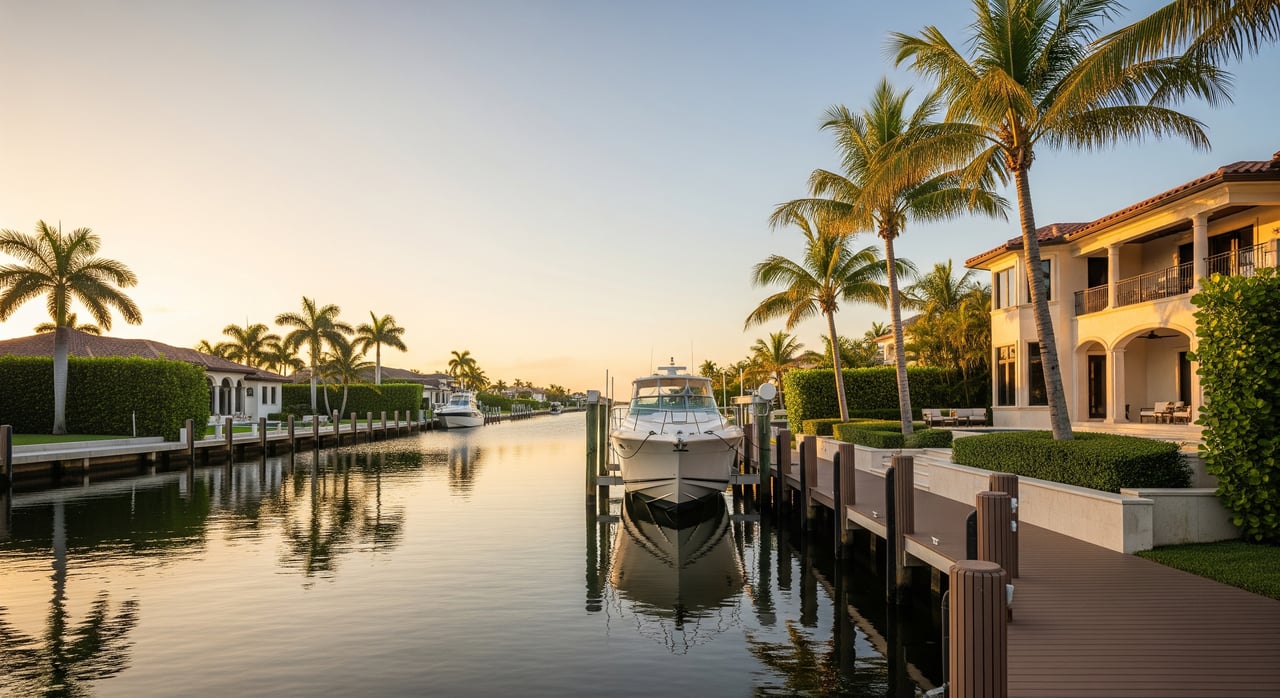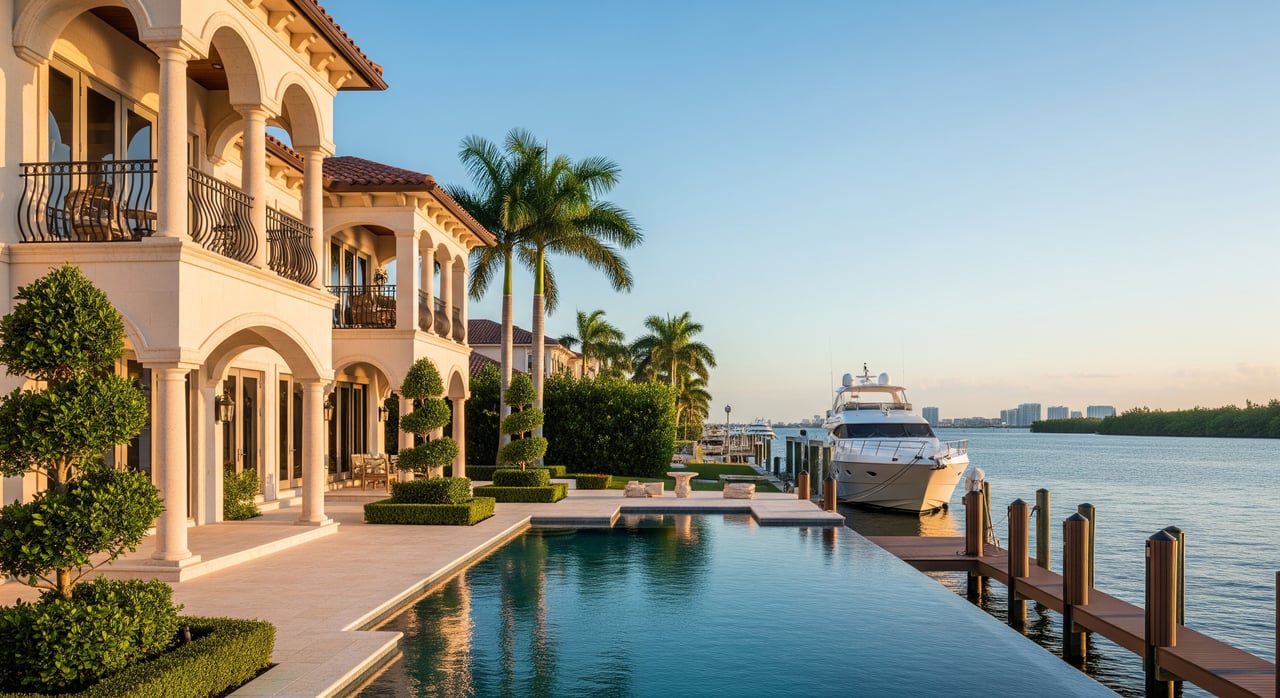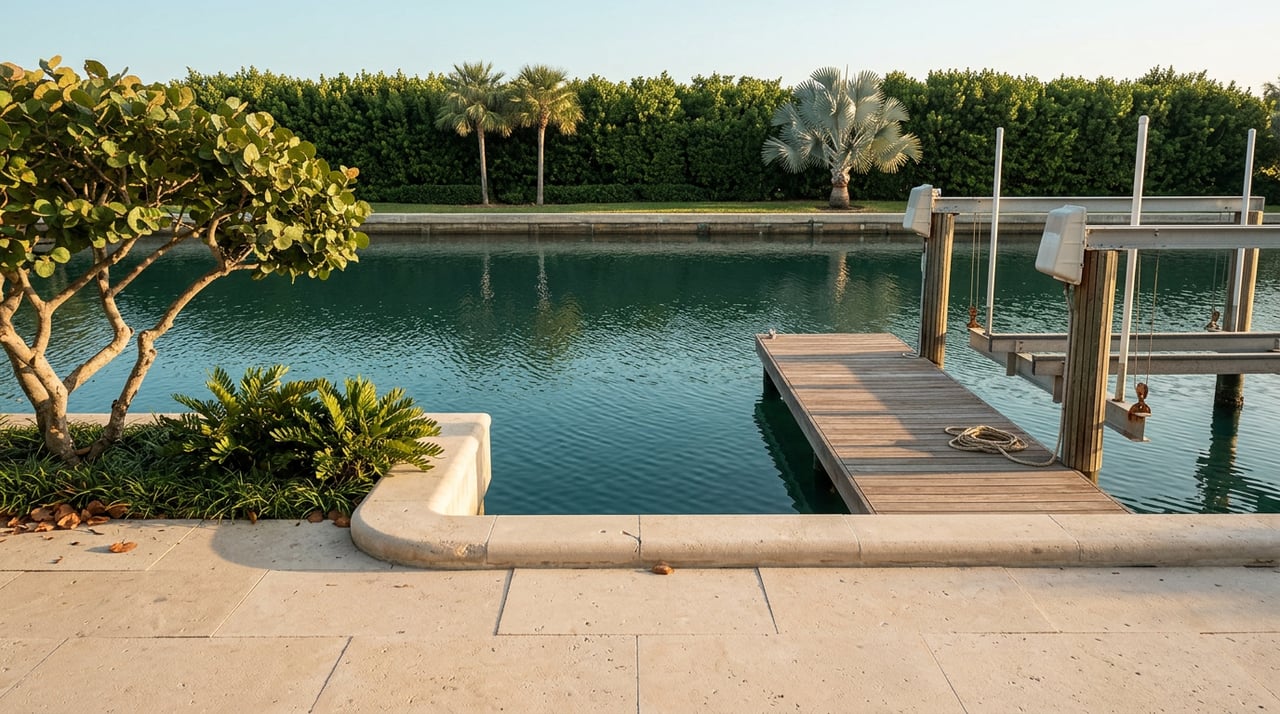
A buyer's inspector kneels at the seawall cap on a bright afternoon, notebook in hand, and finds exactly what he expected to find: nothing. The cap is straight. The paint is fresh. The dock cleats gleam. Everything above the waterline looks the way a $9 million listing should look.
Then he walks the seawall's weep holes, checks the tie-back rods behind the panel, and asks who trimmed the mangroves along the property line last year. That is when a buyer may ask for records about the seawall, dock, and nearby mangroves as part of due diligence.
Those questions can lead to a closer look at the seawall and dock.
What a seawall inspection can assess
Aqualane Shores was carved out of dredge and fill starting in 1949, the same year Naples became a city, and the first homes went up the following year. Most of those original structures have since been rebuilt, but the seawalls lining the neighborhood's no-bridge, deep-water canals are frequently much older than the houses sitting behind them. A wall can look pristine from the dock and still be failing where nobody looks.
J&M Marine Construction, a Naples marine contractor that inspects seawalls across the city's waterfront neighborhoods, has put it plainly: Aqualane Shores and Port Royal seawalls often hide damage behind clean caps and fresh paint, which is exactly why a real inspection matters before a sale. The failure sequence is quiet. Water pushes behind the wall during tides and storm surge, pulls soil out through weep holes or hairline gaps, and the cap doesn't drop until the erosion behind it has already progressed. A wall can be leaning a few degrees in spots that matter while reading as level to the eye.
Docks and seawalls fail together, not separately. Pilings driven close to the cap put dock loads directly on the wall during storms. If the wall starts to tilt, the pilings shift with it. If the wall fails outright, dock access from shore disappears overnight, and soil loss behind a leaking wall can undercut pilings from below the surface long before anyone notices from above.
Here is the gap between what a showing reveals and what a diligence period actually tests:
| What a walk-through shows | What an inspection actually verifies |
|---|---|
| A straight cap and fresh paint | Tie-back rods, weep holes, and soil condition behind the panel |
| A tidy tree line along the canal | Whether mangrove height and trimming history comply with state permitting |
| A working boat lift and clean dock | Whether the marine permit file exists and matches what was built |
None of these three are things a buyer can see from the lanai. All three are things a buyer's attorney, lender, or inspector will ask about once the home is under contract.
Mangrove trimming records
Florida protects red, black, and white mangroves under the state's Mangrove Trimming and Preservation Act.
The rules turn on height. According to Mitigation Banking Inc., a homeowner can trim mangroves within a Riparian Mangrove Fringe, a shoreline band up to 50 feet deep, without a permit as long as each tree stays at or above 6 feet and none of it is over 10 feet before trimming, as Florida DEP explains. Once mangroves exceed 10 feet, the work requires a state-qualified Professional Mangrove Trimmer. Past 16 feet, trimming has to happen in stages, no more than 25 percent removed in a given year. Past 24 feet, written DEP authorization is required regardless of who does the work.
Trimming records may be difficult to locate when the work was done years ago and documentation was not retained. During due diligence, a buyer's counsel may ask for the trimming history, so sellers can confirm what records are available, take current photos, and measure canopy height against the exemption thresholds before listing.
Dock and seawall permit records
The City of Naples has written dock and seawall regulations specific to this neighborhood alongside Port Royal, Coquina Sands, and the city's other canal-front communities.
A lender's project review or a buyer's title search may prompt a request for the marine permit file. A missing marine permit, or one that doesn't match the dock as actually built, is easier to review before a buyer is under contract.
How waterfront features shape sale due diligence
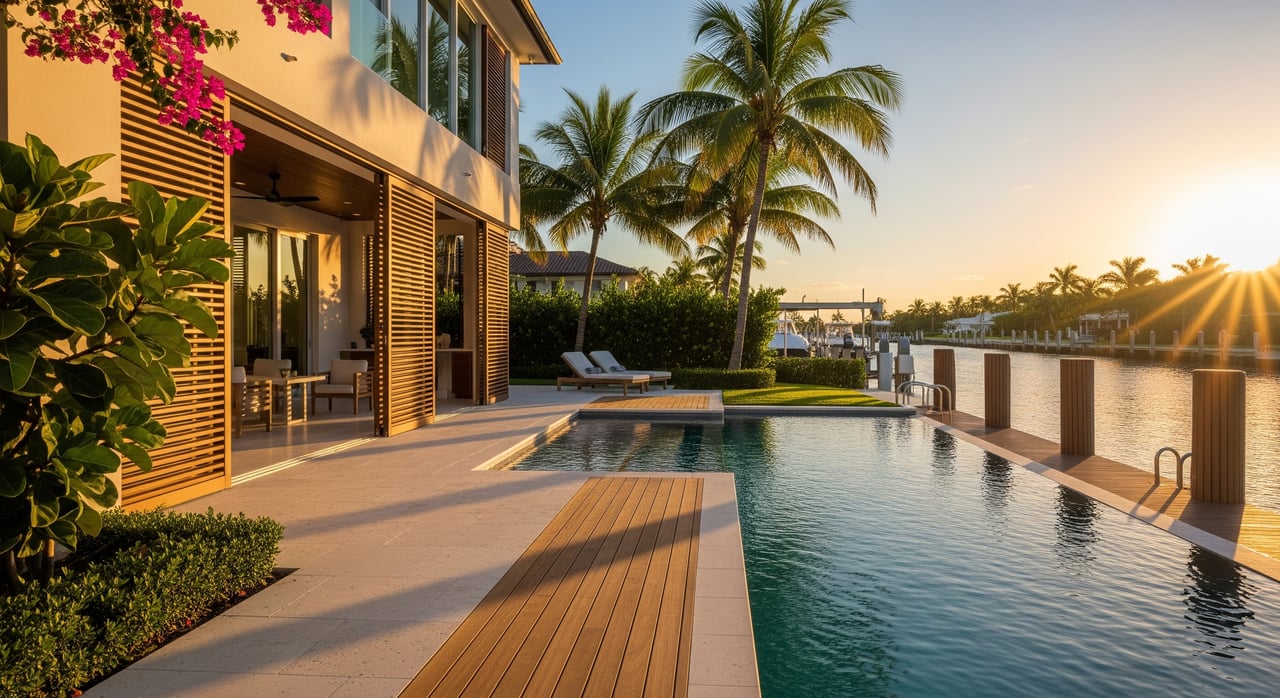
Aqualane Shores sits between Port Royal and Old Naples, and its defining feature is no-bridge access, a rare trait among Naples' canal neighborhoods that lets taller boats dock at home rather than at a marina. That access is precisely what commands the premium.
Single-family sales in the neighborhood closed in 2025 at an average price above $9.7 million, running close to $2,000 per square foot, with the year's top sale exceeding $31 million for a home on a three-quarter acre lot. At that price band, a special assessment for seawall repair, missing mangrove paperwork, or an unpermitted dock deserves attention before a buyer's diligence period.
The sequence that keeps a sale on schedule
A seller who orders the right documentation before listing controls the timeline instead of reacting to it.
- Commission a combined dock and seawall inspection, including a below-waterline check on pilings and wall panels, months before the home goes live.
- Pull the mangrove trimming history, measure current canopy height against the exemption thresholds, and confirm whether a Professional Mangrove Trimmer or DEP permit was ever involved.
- Locate the original marine permit file for the dock and lift, and verify it reflects what's actually built on the property.
- Address any findings on the seller's schedule, not the buyer's, so the diligence period confirms rather than discovers.
Having these records assembled before a contract lets the diligence period focus on reviewing them rather than locating them.
A few questions worth asking early
Why address seawall problems before listing? Many walls pass inspection with only minor repairs. The risk is discovering a larger problem mid-contract rather than before listing, when there's still room to negotiate price, timeline, or repair credits on the seller's terms.
Do all Aqualane Shores docks fall under the same permit rules? No. Dock size and permitting depend on water depth, frontage, and whether the work involved dredging or filling, which is why the original permit file for a specific property, not a general neighborhood rule, is what a buyer's team will want to see.
Selling a canal-front estate in Aqualane Shores is a different transaction than selling a condo or a dry lot two streets over, and the difference shows up at diligence, not at the negotiating table. Bates | Ives works these details ahead of a listing rather than after an offer arrives, coordinating seawall and dock inspections, mangrove documentation, and permit review so a sale moves on the seller's schedule. If you're considering a private conversation about preparing an Aqualane Shores property for sale, request a private consultation before seawall, dock, or permit questions arise during due diligence.
This article is general information, not legal, tax or financial advice. Consult a qualified professional about your situation.